



Before I get to Halcyon Years and other SFF reading during my sabbatical, I’ll say a few words about other books I’ve been into. One of the pleasures of time off has been reading outside of genre as well as picking up just about anything that catches my eye. I spent a lot of time immersing in (and listening to) Hilary Mantel’s epic Wolf Hall trilogy. It’s a dazzling achievement that moves so effortlessly through the mind of one character while inserting one powerful scene after another into the flow of his perceptions. The audio books of the series are brilliantly interpreted by the actor who created the character of Thomas Wolsey on the stage, Ben Miles, and include a conversation between Miles and Mantel at the conclusion. They remind me what great writing is all about.
I followed that series with Mantel’s other work of historical fiction, A Place of Greater Safety, which captures the personalities of the great figures who were prominent in the French Revolution: Camille Desmoulins and his wife Lucile, Maxmilien Robespierre, and the most powerful figure of all, Georges Danton. (These characters are especially important to me because in days of yore I had the chance to direct and act in another treatment of this period, George Buchner’s Danton’s Death.) While Mantel moves among several points of view in this, her first novel, she concludes with a focus on Danton and his demise. In many ways Danton resembles Wolsey, a character who rose from obscurity to leadership but who could not believe that anyone could take him down. The focus of A Place of Greater Safety is more diffuse than that of Wolf Hall because Mantel wants to capture several characters at their most revealing moments, but I think it might have been more powerful if she had focused on Danton. Nevertheless, that’s quibbling. This is a great reading experience.
Here is a brief summary of some of the SFF books I’ve been reading.
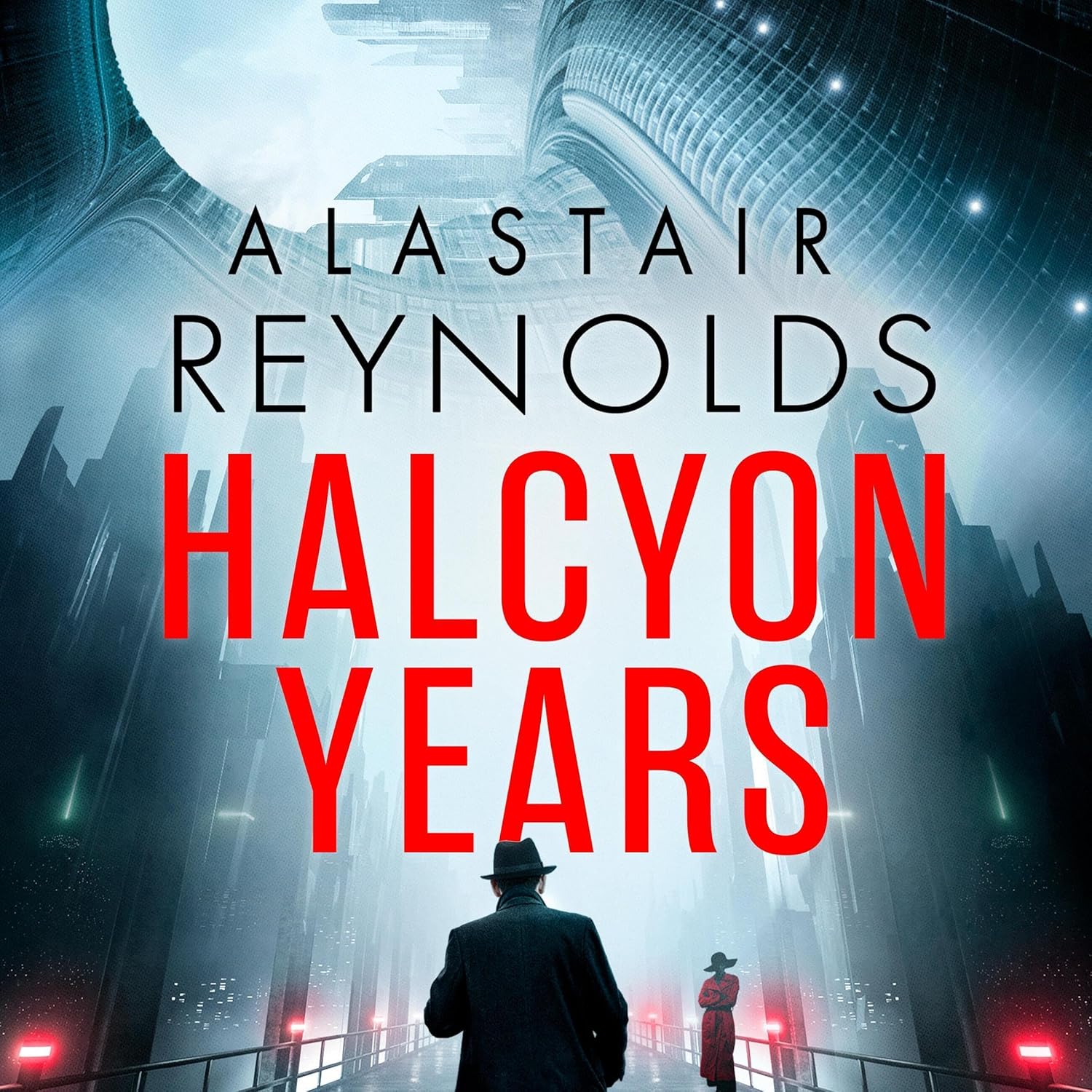
For me, Alastair Reynolds is still the best at straight science fiction, and Halcyon Years continues to demonstrate his versatility within the genre. For this is a detective story set on a generation spaceship with a revived Yuri Gagarin (the first Russian cosmonaut) as the private detective barely making ends meet in the extraordinary world of Halcyon. This is a vast spaceship turned into a 50 kilometer-long complex habitat with cities, a river, lakes and forests and millions of inhabitants. It is on a 400-year journey to a new planet while traveling at ten percent of the speed of light. The place is dominated by two rival and ruthless families, and Yuri is called on by the beautiful but slightly strange, Ruby Blue, to solve a murder mystery. Equipped with a fancy new car and accompanied by a clever robot as well as a disgraced police detective, he sets out to understand how and why two young scions of the rival families met their untimely deaths. In solving the mystery, Yuri has to confront a vast coverup as well as a shocking truth about himself. It’s an absorbing story and, while told in mostly a spare style, has many artful passages reminiscent of Raymond Chandler (For example: “His words were devaluing on arrival, like some tumbling currency.”).
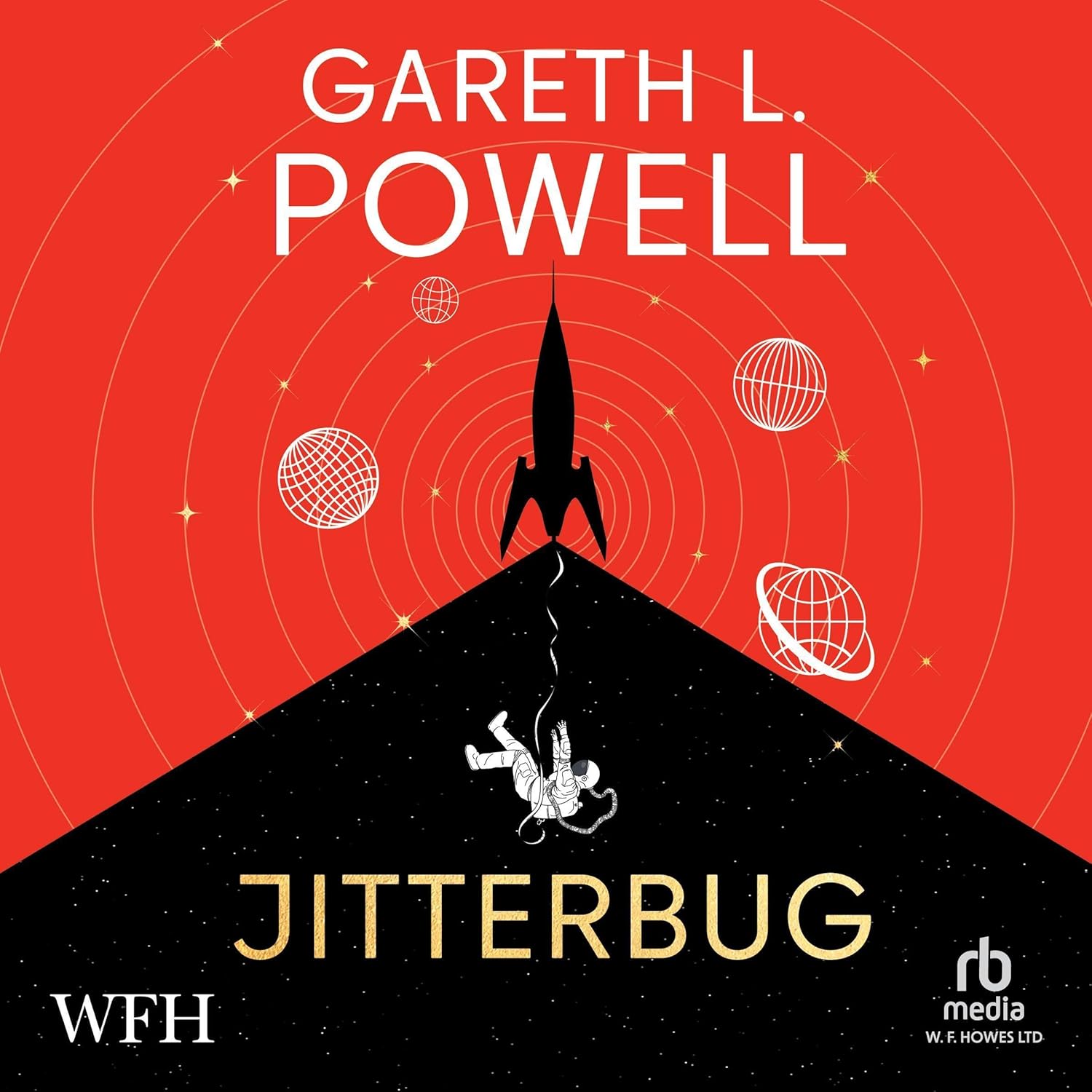
Gareth L. Powell’s Jitterbug is an exciting space adventure set in our solar system after a radical transformation. A mysterious alien force has reshaped the outer planets into huge pieces outside the orbit of Mars that resemble sections of a enormous orange peel. The sides facing the sun have provided vast new territories for settlement, and the whole structure is called the Swirl. After the murder of his father, Copernicus Brown has taken charge of the family spaceship, Jitterbug, and roams the Swirl as a bounty hunter. The ship’s avatar takes the form of a parrot that keeps its perch on Brown’s shoulder so it can go with him planetside. Using one of a number of science fictional tropes quite skillfully, Powell sets the Jitterbug on a new course to respond to a distress signal from a pair of wrecked spaceships locked together and slowly drifting in space.
Brown and his crew pick up a survivor, who calls herself Amber Roth, and the story is really underway. Roth turns out to be keeping more than one secret, and before long we find the solar system under threat from a rapidly approaching spaceship bigger than the moon. In the background is also a pirate ship headed by a classic villain, none other than the man who murdered Brown’s father. There is a big twist in the latter part of the book as well as a relationship between Brown and Roth, neither of which are quite as believable as they should be. But that’s OK because the writing and the spirit of the novel keep things moving. I found this to be one of Powell’s best space adventures, and he now has quite a few fine ones to his credit.
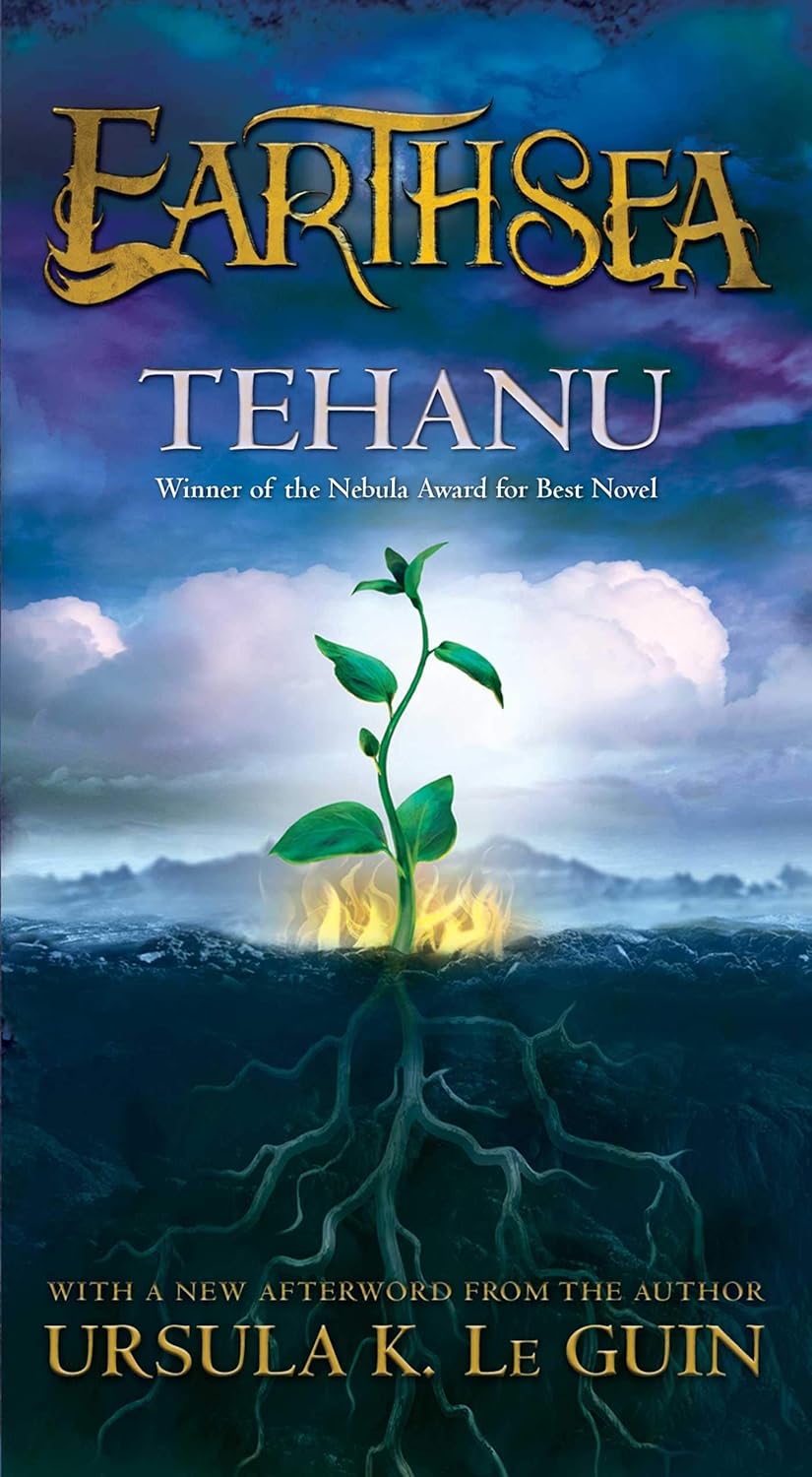
Tehanu, the fourth novel in Ursula K. LeGuin’s Earthsea series, quickly became my favorite of all these books. Written twenty years after the earlier books, it tells the story of the middle aged Tenar, who escaped with Ged from the restrictions of her priestess role in The Tombs of Atuan years before. Under the name Goha she married a farmer and after his death cared for a young girl, who had been mistreated and badly burned. The dying mage Ogion entrusts Goha/Tenar with the raising of this girl, Therru. This is an anti-heroic story in which the principal characters have lost their magical powers and have to learn how to live as ordinary people, though they still possess a lot of extraordinary experience in their pasts which gives them a new form of wisdom. Ged, the great mage of Roke, arrives on the back of a dragon, but he is broken, exhausted, his magical powers gone and his body near death. Tenar nurses him back to health with the aid of the Therru, and the three have to fight off a group of violent men who want to back Therru, but that part of the plot is rather quickly disposed of. The questions facing them all at the end of the story is how they will learn to live a fulfilling, if simple, rural life. Therru has progressed through several stages in her relationship to magical power and finds herself in a balance and love as the final chapter of her life begins. This is a book full of wisdom about the maturing life of women, which Le Guin makes quite explicit in the afterward to the novel. There she recounts her own struggle to come to terms with feminism, her own deep anger and the kind of fiction that celebrates the traditional male-dominated hierarchies of power. That personal coda adds a lot of depth to a fine book.
I’ve read many other SFF novels during this sabbatical, but these are the standouts, except for my exploration of Gene Wolfe’s The Book of the New Sun. I’ll discuss that series in an upcoming essay.
A further note about the future of this blog: I will be moving to a new hosting site and making a lot of changes as I do so. If you are an email subscriber to SciFi Mind, I’ll make sure you don’t have to sign up again – all will continue as before. I’ll be ready with a full announcement in a couple of months.

Leave a Reply